Ana Navarro Moyano
International alliances are rarely forged in times of stability; they are truly tested in moments of uncertainty. Against this backdrop, the African Union’s recent recognition of the European Union as its Most Valued Partner for Governance, Peace and Security reflects more than two decades of sustained cooperation aimed at addressing the continent’s recurring crises and security challenges, most notably through the EU’s long-standing support for the African Peace and Security Architecture (EEAS, 2026). Yet one region continues to challenge this recognition: West Africa. Here, European engagement is met with skepticism, shaped by historical legacies and evolving political dynamics. At the same time, jihadist violence, institutional fragility following successive military coups, and growing geopolitical competition have turned the region into one of the world’s most complex security environments. Can the European Union translate its recognized role into a sustainable and mutually beneficial strategy that delivers tangible results in West Africa?
The central question, however, is not simply what challenges confront the European Union in West Africa, but how those challenges should be understood. It is tempting to attribute the growing distance between the EU and parts of Africa’s political leadership and public opinion to foreign disinformation campaigns or to the expanding influence of Russia and China. Such explanations are ultimately too convenient, as they mistake symptoms for causes. The changing geopolitical landscape reflects a broader transformation of the global order, given that Africa is no longer a peripheral arena where major powers compete for influence (Burgeño Mallo, 2025; Tisserand, 2025). In recent years, African states have been defining their own strategic priorities, diversifying their alliances and collaborating with external actors on their own terms. As the Carnegie Endowment for International Peace (2025) has pointed out, their aim is to increase their room for manoeuvre in a changing multipolar world.
This shift has coincided with a rapid deterioration in the regional security environment. The Sahel is now one of the world’s main epicenters of violent extremism. Armed groups affiliated with Al-Qaeda and the Islamic State continue to extend their influence towards the coastal states of the Gulf of Guinea, while military coups have weakened state institutions that were already fragile. Governance, peace and security are therefore increasingly intertwined and can no longer be treated as separate policy areas; there is a need for an integrated response (Burgeño Mallo, 2026). Reaffirmed in the joint communiqué of the 2026 Summit between the European Union and the African Union, lasting peace requires strengthening the rule of law and simultaneously combating terrorism and disinformation (EEAS, 2025).
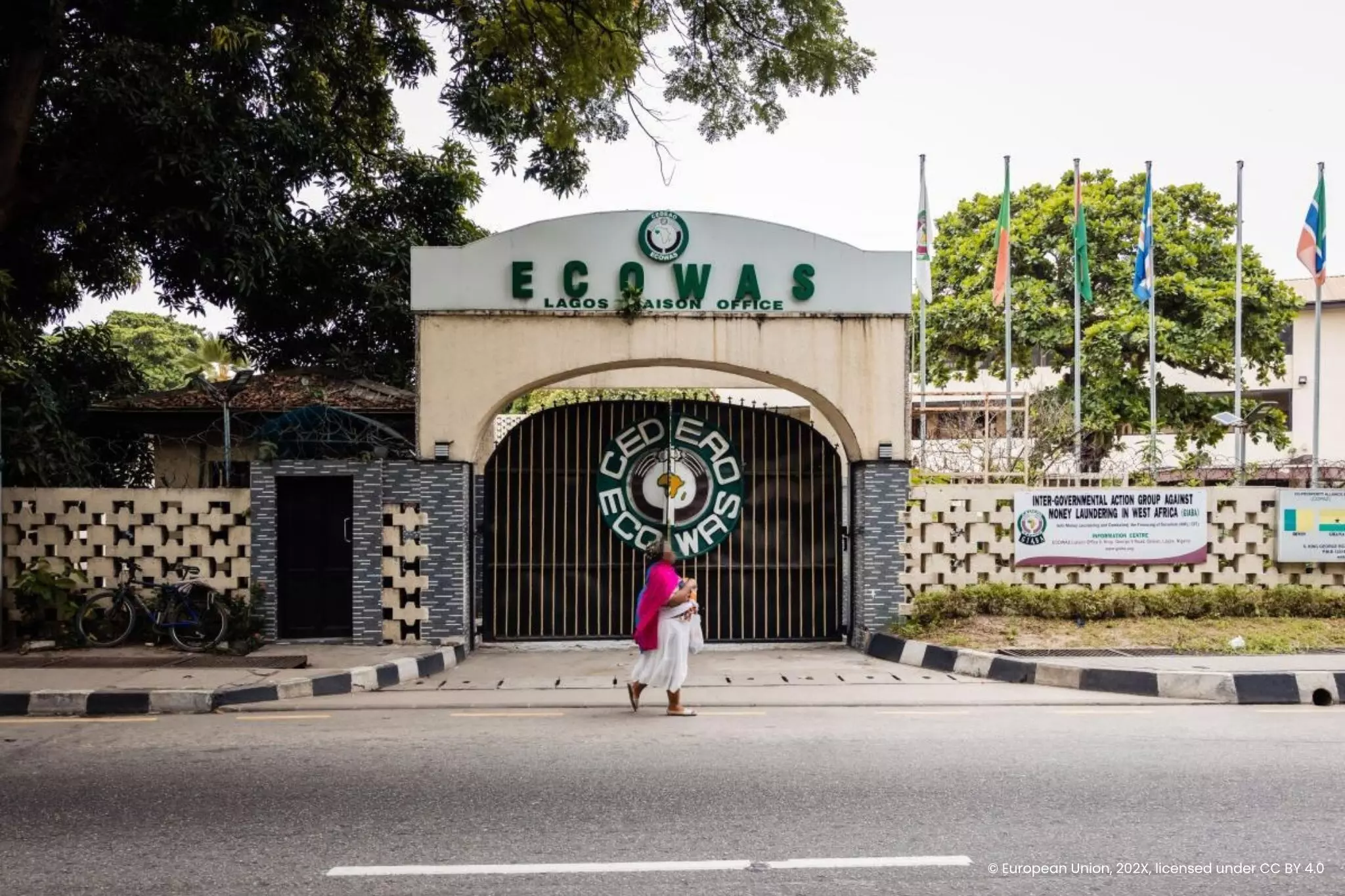
Beyond its immediate security implications, instability in West Africa also has far-reaching consequences for regional integration and the continent’s overall political and economic trajectory. At the continental level, persistent instability undermines the credibility of the African Peace and Security Architecture at precisely the time when the African Union is seeking to consolidate its role as the primary framework for providing African solutions to African problems. Within West Africa, meanwhile, democratic backsliding, recurrent military coups and protracted insecurity have undermined the regional integration project championed by the Economic Community of West African States (ECOWAS). The result is a fragmented regional order, with the potential to contribute to an expanding belt of instability stretching from the Atlantic coast towards the Red Sea (Comini, 2025). Governance, peace and security must thus be understood as the foundations upon which regional integration and long-term development depend. In this sense, strengthening democratic institutions and curbing violent extremism are essential not only to attract investment and uphold the rule of law, but also to unlock the demographic and economic potential of one of the world’s youngest regions.
In addition to their implications for the region, these dynamics are also reshaping the strategic context of relations between the EU and Africa. For the European Union, engagement in governance, peace and security across West Africa might become a strategic imperative, as weak governance creates the conditions for the proliferation of violent extremism, organized crime and irregular migration, with consequences affecting both continents. In this regard, stability must be understood as a shared public good. Consequently, European security now begins with the resilience of its partners, and their ability to prevent instability before it crosses borders. From this perspective, the complexity of the challenges facing West Africa must be seen both as a source of risk and as an opportunity to redefine the partnership between the EU and Africa (Bergmann, 2025).
It is, however, an almost Herculean task. The proliferation of actors willing to provide immediate responses based solely on the supply of arms or on security agreements detached from institution-building has altered the strategic landscape in West Africa. Attempting to compete on those terms would strip the European Union of the very comparative advantage that distinguishes it from other external actors. Europe’s strength lies, instead, in reinforcing regional governance; the very history of European integration is perhaps the strongest argument in favor of this approach. Such logic is most relevant in West Africa, where political fragmentation calls for regional rather than purely national responses. Indeed, many of the region’s most pressing challenges transcend national borders and hence require collective solutions. The task for the EU is to demonstrate this distinctive logic through concrete partnerships in the region.
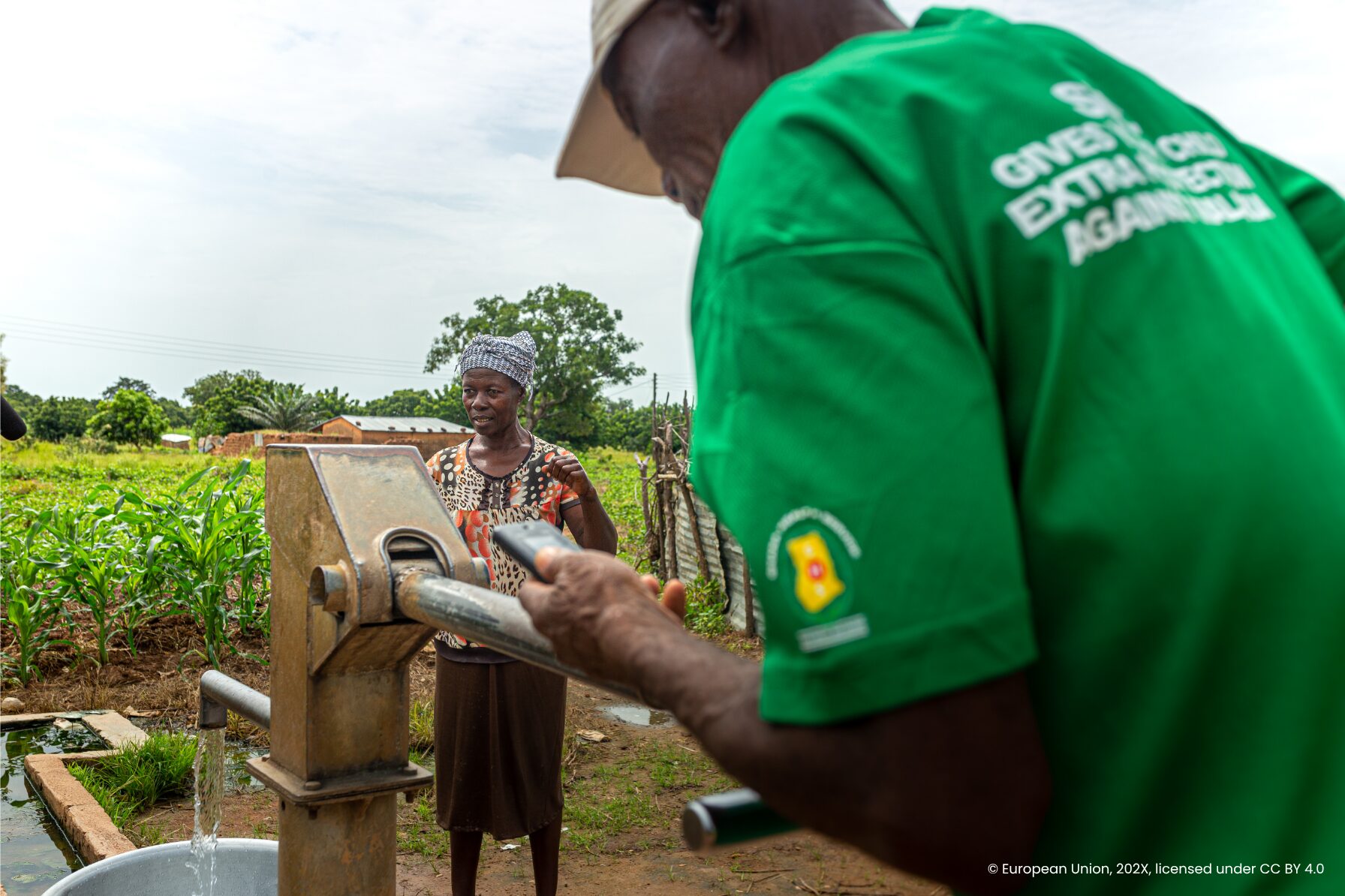
The recently signed EU–Ghana Security and Defense Partnership is perhaps the clearest example of this evolving approach. As the first agreement of its kind between the European Union and an African state, it embodies a broader vision of contemporary security and the growing interdependence between the two continents (EEAS, 2026). Rather than focusing exclusively on counterterrorism cooperation, the partnership also covers hybrid threats, border management, climate resilience and the Women, Peace and Security agenda. In doing so, it recognizes that today’s security challenges are multidimensional and cannot be addressed through military responses alone (Brown & Krause, 2026). Equally significant is its political symbolism. Given that the perception persists in parts of Africa that certain European initiatives primarily advance national agendas, particularly those stemming from France’s historical involvement in the Sahel, coordinating action through the European Union offers a more credible and impartial framework (Collazzo, 2025). As a result, it may help dissociate engagement from colonial legacies while redirecting its focus towards a genuinely European project grounded in collective responsibility and shared legitimacy.
In short, “security in Europe and Africa is directly linked”, stated the High Representative Kaja Kallas when she signed the agreement with the West African country. A more stable West Africa reduces irregular migration and terrorism, fostering trade opportunities and, consequently, European investment. The African Union’s recognition of the European Union as its Most Valued Partner for Governance, Peace and Security should accordingly be understood as more than an acknowledgement of ongoing cooperation. It reflects the expectation that the EU will continue to translate institutional credibility into a sustainable strategic partnership, arguably its most valuable asset in moments of uncertainty.
References
- Bergmann, J. (2025). Assessing 25 years of partnership between the AU and EU: Closer cooperation in peace and security. Stiftung Wissenschaft und Politik
- Brown, W. & Krause, L. (2026). After Ukraine: The peace dividend Africa does not want. European Council on Foreign Relations
- Burgeño Mallo, D. (2026). From ideological terrorism to a hybrid actor: crime-terror convergence in the Sahel and jihadist expansion towards the Gulf of Guinea. Instituto Español de Estudios Estratégicos. Opinion Paper 51/2026
- Collazzo, M. (2025). The African Union–European Union partnership at a crossroads. Istituto Affari Internazionali
- Comini, N. (2025). Africa still matters: An EU opportunity. Center for European Policy Analysis
- European External Action Service. (2026). European Union receives “Most Valued Partner” award for governance, peace and security in Africa. https://www.eeas.europa.eu/delegations/african-union-au/european-union-receives-most-valued-partner-award-governance-peace-and-security-africa_en
- European External Action Service. (2026). Ghana: Press release on the signing of the Security and Defence Partnership and the handover of EPF military equipment. https://www.eeas.europa.eu/eeas/ghana-press-release-signing-security-and-defence-partnership-and-handover-epf-military-equipment_en
- European External Action Service. (2025). European Union Political and Security Committee–African Union Peace and Security Council: 16th annual joint consultative meeting. https://www.eeas.europa.eu/eeas/european-union-political-and-security-committee-%E2%80%93-african-union-peace-and-security-council-16th_en
- Martinelli, M. (2025). Can Europe and Africa Mend Fences? Carnegie Endowment for International Peace
- Tisserand, S. (2025). Harmattan hazards: How coastal West Africa can escape the Sahel’s fate. European Council on Foreign Relations

Financiado por la Unión Europea. Las opiniones y puntos de vista expresados solo comprometen a su(s) autor(es) y no reflejan necesariamente los de la Unión Europea o los de la Agencia Ejecutiva Europea de Educación y Cultura (EACEA). Ni la Unión Europea ni la EACEA pueden ser considerados responsables de ellos.