
Laura Alcaine Bonasa
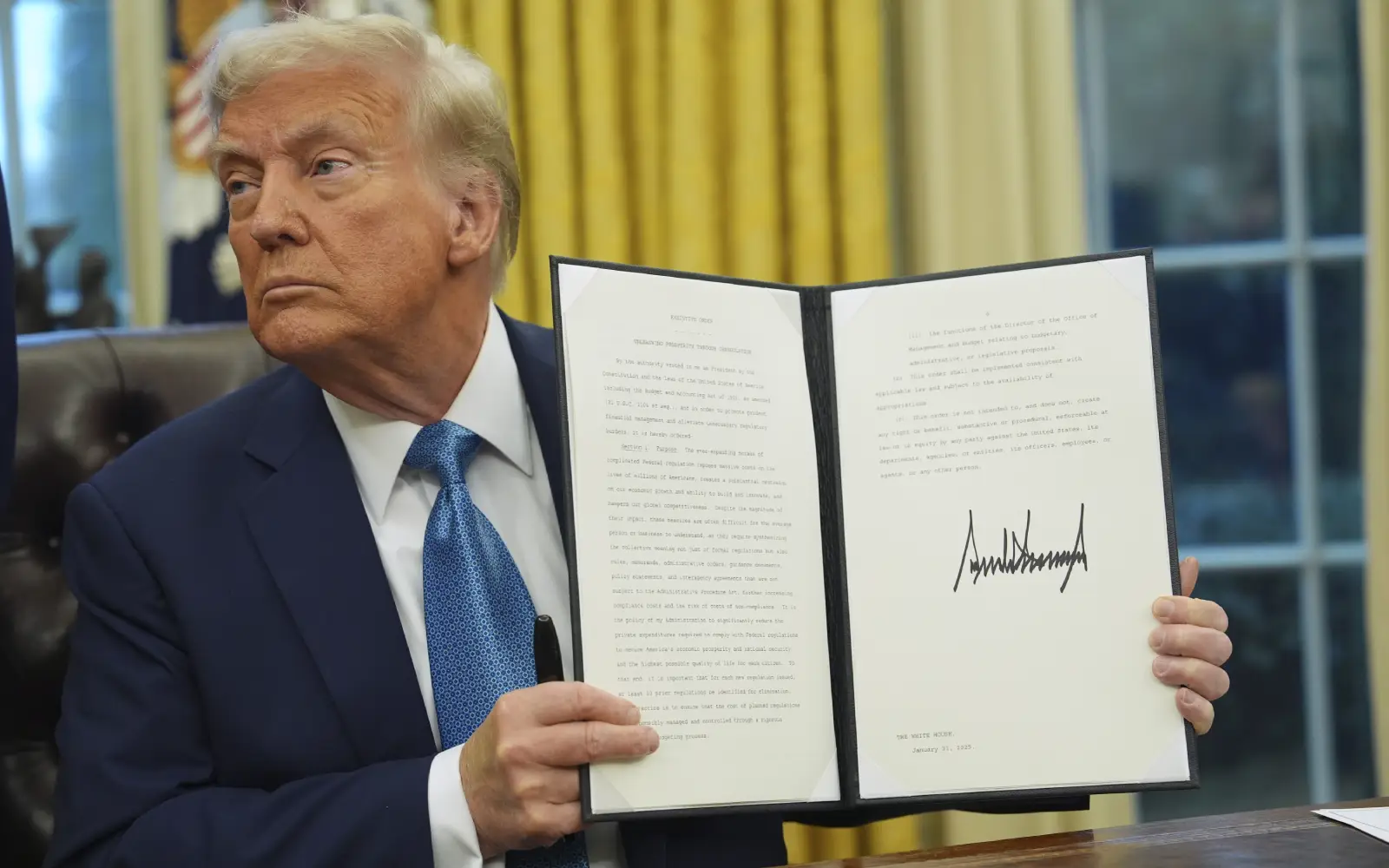
I’ve always liked to compare the international stage as a Jenga game tower: related actors, some holding the system, others being held. A game in which every move counts and has to be strategically thought out. We have experienced a fairly strong start to 2026 in terms of geopolitics: Donald Trump decided to cross the borders of Venezuela and, after an entire summer «fighting against drug trafficking in Caribbean waters,» captured and transferred Nicolás Maduro, «president» of Venezuela, to the United States. A movement that stems from the structural change that led to the closure of USAID in January 2025 and which must be analyzed under the microscope.
One of the first measures taken by Donald Trump when he came to power in 2025 was to reduce the aid that the United States provided to other countries. A measure that is going to have a profound long-term impact, since approximately 30% of the total international aid provided worldwide came from American sources. This could translate into 14 million additional deaths in 2030 according to a study published in the medical journal The Lancet. However, the White House assured that they would continue to administer aid through other channels. But what kind of aid? The one that Venezuela has received following some strategies of colonization that characterized imperialism?
The movement of this piece began to destabilize the International Development Cooperation Jenga: by abolishing its agency for development aid, the United States has shown that for them development aid is only a means to impose their sovereignty. The IDC has a number of rather considerable blind spots: if religion was used before as a tool of control disguised as charity, people’s sovereignty is now beginning to be overlooked under the pretext of humanitarian intervention. When aid becomes a competition for power, the line between cooperation and colonization becomes ever thinner.
Movement of a developed country, fall of an underdeveloped country
As in every game of Jenga, removing a piece is a risk to the person who removes it and the rest of the pieces left in the tower. Abolishing USAID left the United States without one of its most important agencies in its foreign policy and, moreover, for politically informed people, it took away its credibility as to democratic principles. However, despite the weakening of its foreign policy, those who have suffered most have been the most vulnerable blocs: fragile states. All those wooden blocks that were supported by USAID risk falling into a vacuum, and a domino effect fall of all blocks would cause the total collapse of the tower: the collapse of the international system.
Success in these contexts depends on the local resilience of the «weaker» countries themselves. Fragile states need systems that provide long-term solutions. The strategy adopted by Trump based on direct intervention achieves exactly the opposite: it destroys the societies of countries under the pretext of an imposed freedom. By cutting off aid to these countries, which often suffer from chronic crises, they are condemned to repeat their history cyclically, because we should remember that many of them continue today to suffer the consequences of colonialism. Trump’s «master move» in the Jenga tower is nothing more than an aggressive attack with military targets. For him, the Jenga tower is just a pile of wooden blocks waiting to be knocked down.
The Jenga Tower: an unstable structure
Playing Jenga has never been easy. It requires strategy, temperance and precision. You can remove a key piece, but if you do it carefully, you can make the other players believe that those above will not fall, even if they eventually do.
The international system is, right now, exactly like a Jenga tower: fragile. And all this is due to its structure — one of the problems that accentuates this fragility is that the IDC and all its actors should seek the development of fragile states, not just aid. It is rather simplistic to reduce the whole development aid process to a matter of strong versus poor countries, because poor countries have not chosen to be poor; they are poor because rich countries are rich. The fact that 30% of international development aid worldwide depended on a single country is, for me, most of the problem. At the end of the day, this only achieves two things: on the one hand, to camouflage imperialist policies that seek greater control on a global scale and, on the other hand, to further weaken fragile states by making them more dependent.
In the Jenga tower game, the wooden blocks at the base are responsible for supporting the entire tower, but is it really possible that only one country’s funding supports all the others? Was the United States prepared to represent that 30%? It has become evident that Donald Trump did not close USAID to «reform the international aid mechanism of the United States.» He did it because he could — because by removing that block of wood, he knew the tower would soon start to fall down, because once destroyed, he knew he would have the resources to rebuild it. And sadly, Jenga is just a board game. It is not the future of wooden blocks that is at stake, but the future of millions of people.
Este artículo se incluye dentro de la Cátedra Jean Monnet «European Union’s external relations and Spanish Foreign Policy».